2026-10-31 · David Ramirez
How to Check for Mold in Fort Myers Crawl Spaces
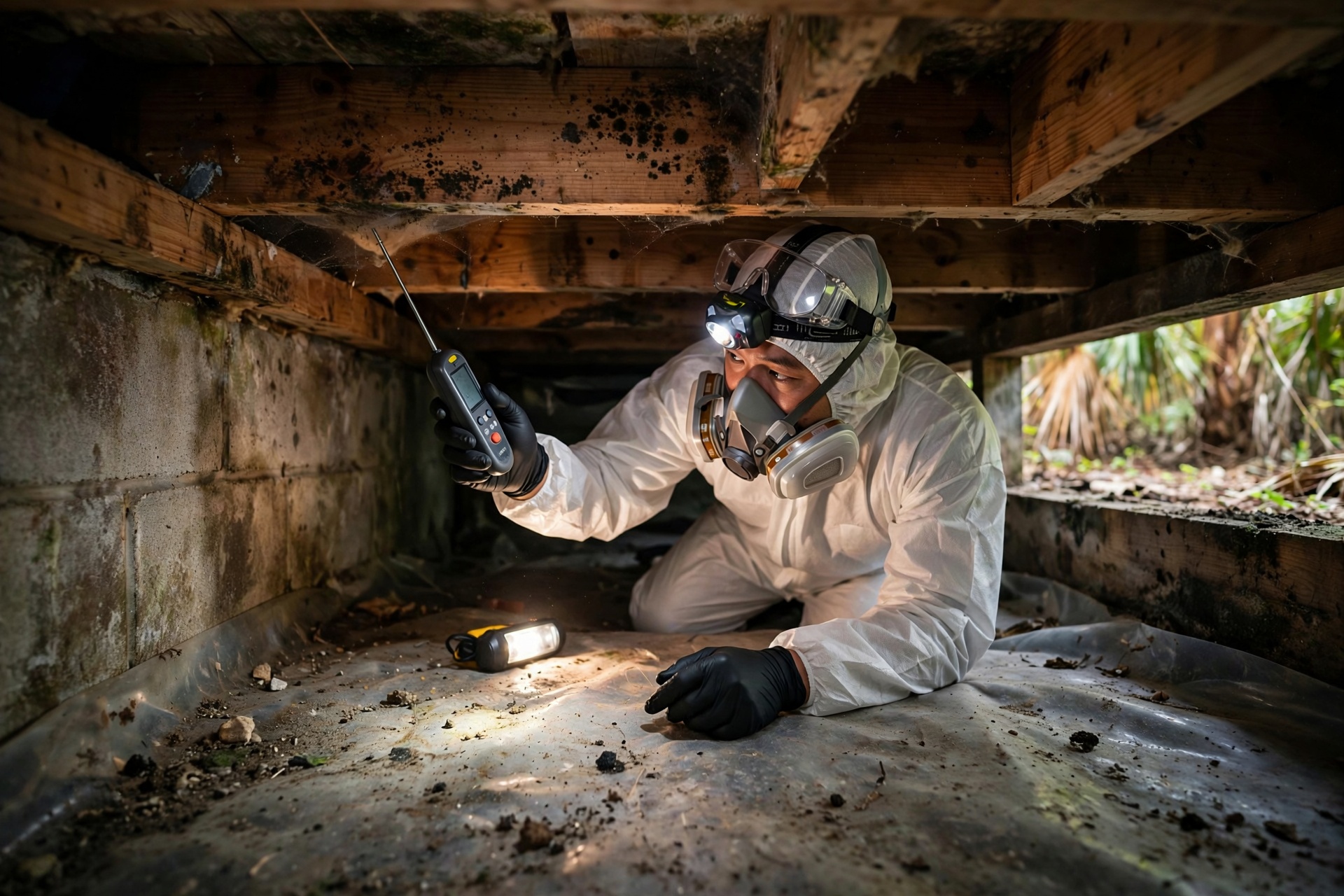
To check for mold in Fort Myers crawl spaces, start with a visual and moisture inspection focused on wood framing and insulation after periods of high humidity, then use a moisture meter to confirm readings above 16 percent on joists in homes built before 1980.
Local Climate and Crawl Space Risks in Lee County
Fort Myers sits in a tropical savanna climate where hot humid summers push relative humidity above 80 percent for weeks at a time, allowing moisture to linger in crawl spaces under homes in McGregor and Cape Coral. Warm winters prevent full drying, so condensation forms on cooler ductwork and piers even in January. Older pier-and-beam foundations common in the River District trap humidity because limited airflow combines with sandy soil that holds water after afternoon storms. These conditions accelerate mold growth on subflooring and sill plates compared to drier inland areas. Residents in Downtown Fort Myers notice musty odors rising through floor vents more often during late summer when groundwater tables remain elevated.
Preparing for a Safe Crawl Space Inspection
Gather a moisture meter, headlamp, respirator rated for mold spores, and knee pads before entering any Fort Myers crawl space. Shut off power to the area and confirm the space has at least 18 inches of clearance to avoid contact with wiring or pipes. Schedule the check during cooler morning hours when outdoor humidity drops below 70 percent, reducing the chance of introducing additional moisture. Wear disposable coveralls to prevent carrying spores into living areas above. Homes near Centennial Park or the Edison and Ford Winter Estates often feature narrow access doors that require a flexible mirror on a stick for corners behind HVAC equipment.
Step-by-Step Visual and Moisture Check
Enter the crawl space and scan all visible wood surfaces for dark staining or fuzzy growth along floor joists and rim boards. Probe suspect areas with the moisture meter, recording readings on every fourth joist starting from the access door. Check fiberglass insulation for dark patches or sagging that indicates water intrusion from roof runoff or plumbing leaks common in 1960s-era McGregor homes. Examine the soil for standing water or white efflorescence on concrete piers, both signs that the vapor barrier has failed. Use the mirror to inspect behind ductwork where condensation drips onto bottom plates. Note any musty smell strongest near the center of the home where airflow is poorest.
When Findings Point to Professional Help
If moisture readings exceed 20 percent or visible growth covers more than a few square feet, stop the inspection and contact a specialist for mold inspection & testing. Homes in Cape Coral with recent roof work or in the River District after heavy rains often need targeted assessment before spores spread to living spaces. Compare your notes with patterns seen after hurricane season in Fort Myers, where wind-driven rain forces water under siding and into crawl spaces. Review what influences mold removal costs around Fort Myers to understand variables like access difficulty in older neighborhoods. For confirmed growth on structural members, schedule crawl space mold removal rather than attempting DIY cleaning that can disturb spores.
Ongoing Monitoring After Initial Inspection
Re-check crawl spaces in Fort Myers every six months, focusing on the same joists measured previously to track seasonal moisture changes. Install or verify a 6-mil vapor barrier covers all soil and overlaps seams by 12 inches to reduce humidity from the ground. Ensure existing vents remain unobstructed by landscaping debris common along McGregor Boulevard. After any storm, inspect within 48 hours because warm winter temperatures allow rapid mold development on damp wood. Keep records of meter readings and photos to share with technicians if conditions worsen, helping them target remediation in areas like the River District where historic construction limits modern ventilation upgrades.