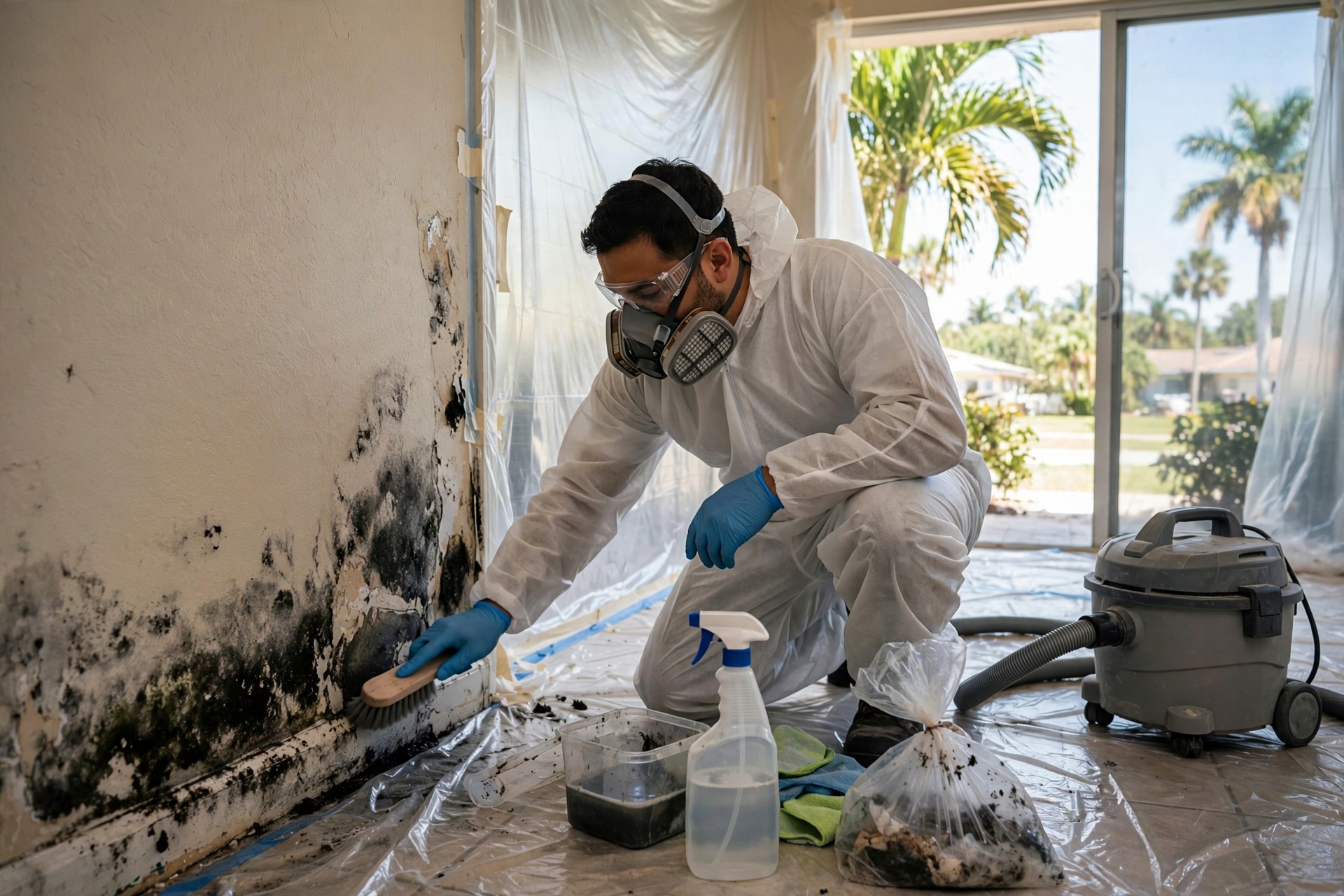
Fort Myers sits in a tropical savanna climate where hot humid summers keep indoor moisture levels high enough for black mold to colonize drywall, insulation, and wood framing. Homes built before modern vapor barriers, especially those in the River District and Downtown Fort Myers, often lack the airflow needed to dry out after even minor roof leaks or condensation. Lee County building practices from earlier decades left many crawl spaces and attics with limited ventilation, letting spores travel through HVAC returns before residents notice odors.
Cape Coral and McGregor properties sit on flat terrain with high water tables, so slab-edge moisture and poor grading push water against foundations during warm winters when rain still falls. Black mold here frequently hides behind bathroom tile or under kitchen cabinets where older plumbing joints have slowly wept. Removing it requires full containment and negative air machines because disturbing the growth without barriers spreads spores into living spaces and forces repeat visits.
After removal, drying must reach below 50 percent relative humidity to stop regrowth in this climate. We test moisture in joists and subfloors rather than relying on surface readings alone, because the humidity here can re-wet materials within days if dehumidification stops too soon. Homeowners in Estero and Bonita Springs often discover the same pattern after summer storms push water into soffits and wall cavities.
Technician insight
In Fort Myers, the thing that catches most people out with Black Mold Removal is how the constant humidity lets mold grow behind walls in older River District homes for months before any musty smell reaches the living areas.
Hidden Growth After Roof Leak in McGregor
A McGregor homeowner noticed a ceiling stain after summer rains. Inspection showed black mold spreading across attic sheathing and into insulation above bedrooms. We contained the space, removed the affected materials, dried the remaining structure, and added ridge vents to improve airflow.
Black Mold Removal Services We Offer
✓Attic Black Mold Remediation
Removes growth from rafters and insulation caused by roof leaks common in Fort Myers summers, then restores ventilation to prevent recurrence.
✓Crawl Space Mold Removal
Treats black mold on joists and vapor barriers in high water-table homes throughout Cape Coral and McGregor where standing moisture persists year-round.
✓Bathroom Black Mold Treatment
Targets mold behind tile and in drywall around tubs and showers where constant humidity from daily use meets older plumbing in River District homes.
✓HVAC Black Mold Cleanup
Cleans mold from ducts and coils that spread spores house-wide after condensation builds during long humid periods in Lee County.
✓Post-Flood Black Mold Restoration
Addresses growth that appears days after storm water enters walls or floors in neighborhoods like Downtown Fort Myers with older slab construction.
Black Mold Removal Cost in Fort Myers, FL
| Service | Typical Range | What Affects It |
|---|---|---|
| Initial inspection and moisture mapping | $150–$350 | Larger homes or multiple affected rooms increase time on site. |
| Small area removal under 10 sq ft | $400–$800 | Bathroom corners or closet walls common in Cape Coral. |
| Attic or crawl space remediation | $1,200–$3,500 | Varies with insulation removal and ventilation repairs needed. |
| HVAC system cleaning add-on | $600–$1,400 | Depends on duct length and coil access. |
Ranges are typical for Fort Myers, FL and confirmed with an exact written quote before any work starts.
How it works
- 1
Site Assessment
Inspect affected rooms, attics, and crawl spaces with moisture meters and borescopes to map hidden growth without disturbing spores.
- 2
Containment Setup
Seal work zones with plastic sheeting and negative air machines to keep spores from reaching other areas of the home.
- 3
Removal and Cleaning
Cut out contaminated materials, HEPA vacuum surfaces, and apply antimicrobial treatments to remaining structure.
- 4
Drying and Verification
Run commercial dehumidifiers until moisture readings drop below 50 percent, then retest to confirm no active growth remains.
Pricing
Cost depends on square footage affected, whether structural materials must be replaced, and access difficulty in attics or crawl spaces.