Fort Myers homes in neighborhoods like McGregor and the River District often date to the mid-20th century with wood framing and limited crawlspace ventilation that traps moisture during the long humid summers. Tropical savanna conditions keep relative humidity above 70 percent for months, allowing mold to colonize behind drywall and under flooring even without a visible leak. Remediation crews must account for the county's high water table and occasional storm surge that pushes moisture into slab foundations in Cape Coral and Estero.
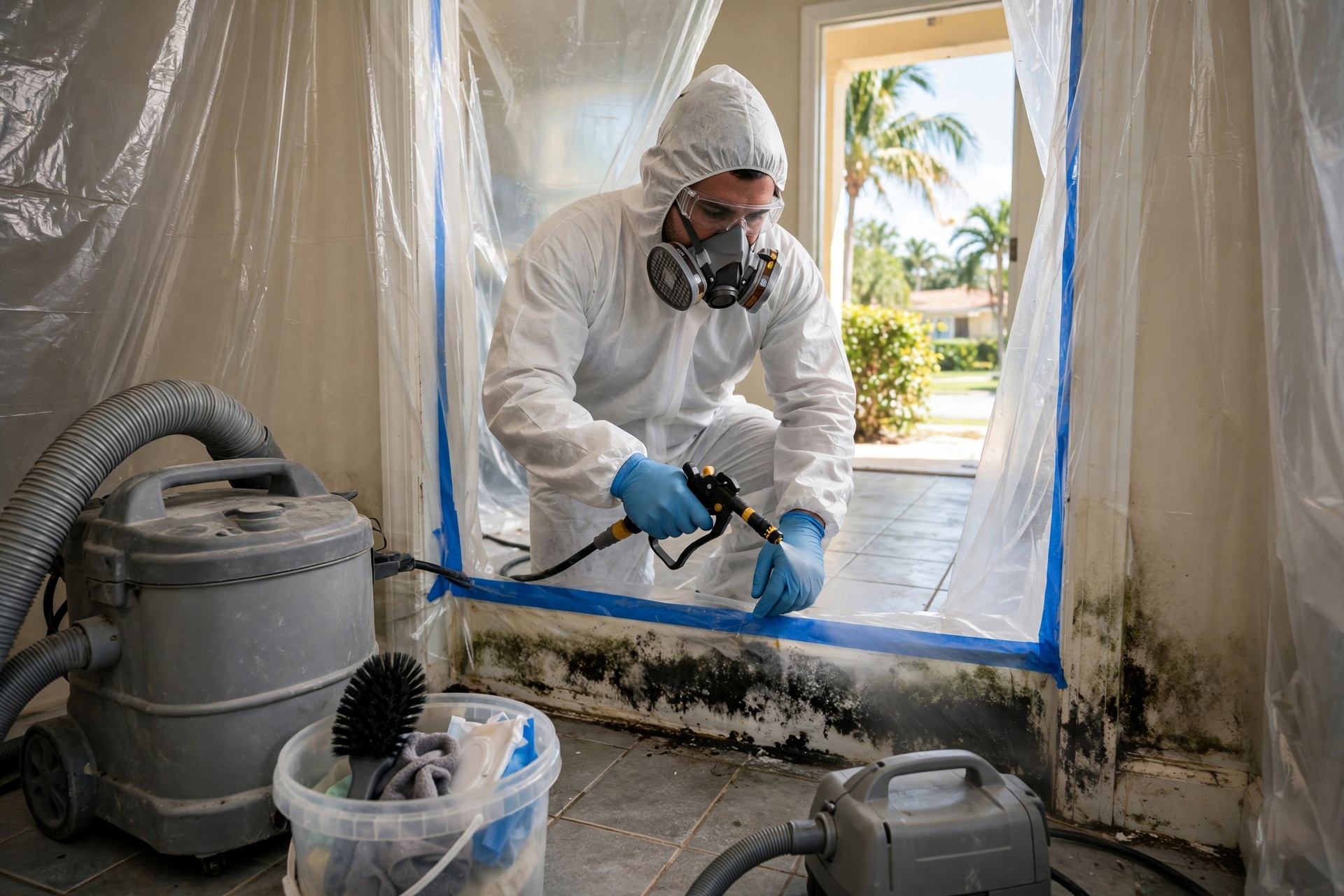
Technicians isolate affected rooms with plastic sheeting and negative air machines before removing porous materials such as carpet pad and drywall that cannot be salvaged. In older River District properties, crews frequently discover hidden growth inside original plaster walls where previous roof leaks went unnoticed for years. All removed material leaves the site in sealed bags to prevent cross-contamination during transport through tight downtown streets.
After source removal, HEPA vacuuming and antimicrobial application treat remaining surfaces. Final clearance testing confirms spore counts match outdoor baselines before reconstruction begins. Warm winter temperatures in Lee County allow year-round work but require extra dehumidification because indoor humidity rarely drops below 60 percent without mechanical help.
Nearby Bonita Springs properties built on fill dirt face different challenges with poor drainage around foundations, so remediation plans often include exterior grading recommendations to reduce future moisture entry points.
Technician insight
In Fort Myers the thing that catches most people out with mold remediation is how quickly growth returns behind kitchen cabinets in McGregor homes when the original roof leak was never fixed; the tropical humidity keeps the wood damp long after the ceiling looks dry.
River District Hidden Growth
A homeowner in the River District noticed musty smell near an exterior wall after heavy summer rain. Inspection revealed mold behind 1960s plaster extending into the floor joists from a slow roof leak. Crews contained the room, removed affected material, dried the cavity for four days, and cleared the space with air testing before drywall replacement.
Mold Remediation Services We Offer
✓Black Mold Removal
Targeted containment and removal of Stachybotrys in humid Fort Myers attics and bathrooms where condensation builds during summer months.
✓Post-Flood Mold Remediation
Cleanup of mold that follows storm surge or heavy rain in low-lying Cape Coral and McGregor neighborhoods near the Caloosahatchee.
✓Attic Mold Remediation
Inspection and treatment of mold growth on roof sheathing caused by poor ventilation in older River District and Downtown Fort Myers homes.
✓Crawlspace Mold Treatment
Encapsulation and drying of mold in raised-floor homes common throughout Lee County where the high water table keeps soil damp year-round.
✓HVAC Mold Cleaning
Removal of mold inside ductwork that spreads spores through homes in Estero and Bonita Springs during constant air-conditioning use.
Mold Remediation Cost in Fort Myers, FL
| Service | Typical Range | What Affects It |
|---|---|---|
| Small bathroom or closet remediation | $800–$1,600 | Limited to one room with easy access |
| Whole-room remediation | $1,800–$3,500 | Includes drywall removal and drying |
| Attic or crawlspace job | $2,200–$4,800 | Extra labor for tight spaces and insulation removal |
| HVAC system cleaning add-on | $600–$1,200 | Ductwork treatment after main remediation |
Ranges are typical for Fort Myers, FL and confirmed with an exact written quote before any work starts.
How it works
- 1
Initial Assessment
Technician inspects all affected rooms and uses moisture meters to map hidden water damage behind walls and under floors.
- 2
Containment Setup
Plastic barriers and negative air pressure isolate the work zone so spores do not spread to unaffected areas of the home.
- 3
Material Removal
Porous materials showing visible growth are cut out and bagged for disposal while non-porous surfaces are cleaned.
- 4
Drying and Treatment
Air movers and dehumidifiers bring moisture levels below 50 percent before antimicrobial application on remaining surfaces.
- 5
Clearance Testing
Air samples confirm spore counts match outdoor levels before barriers come down and reconstruction can start.
Pricing
Cost depends on square footage affected, accessibility, and whether HVAC cleaning or crawlspace work is required.