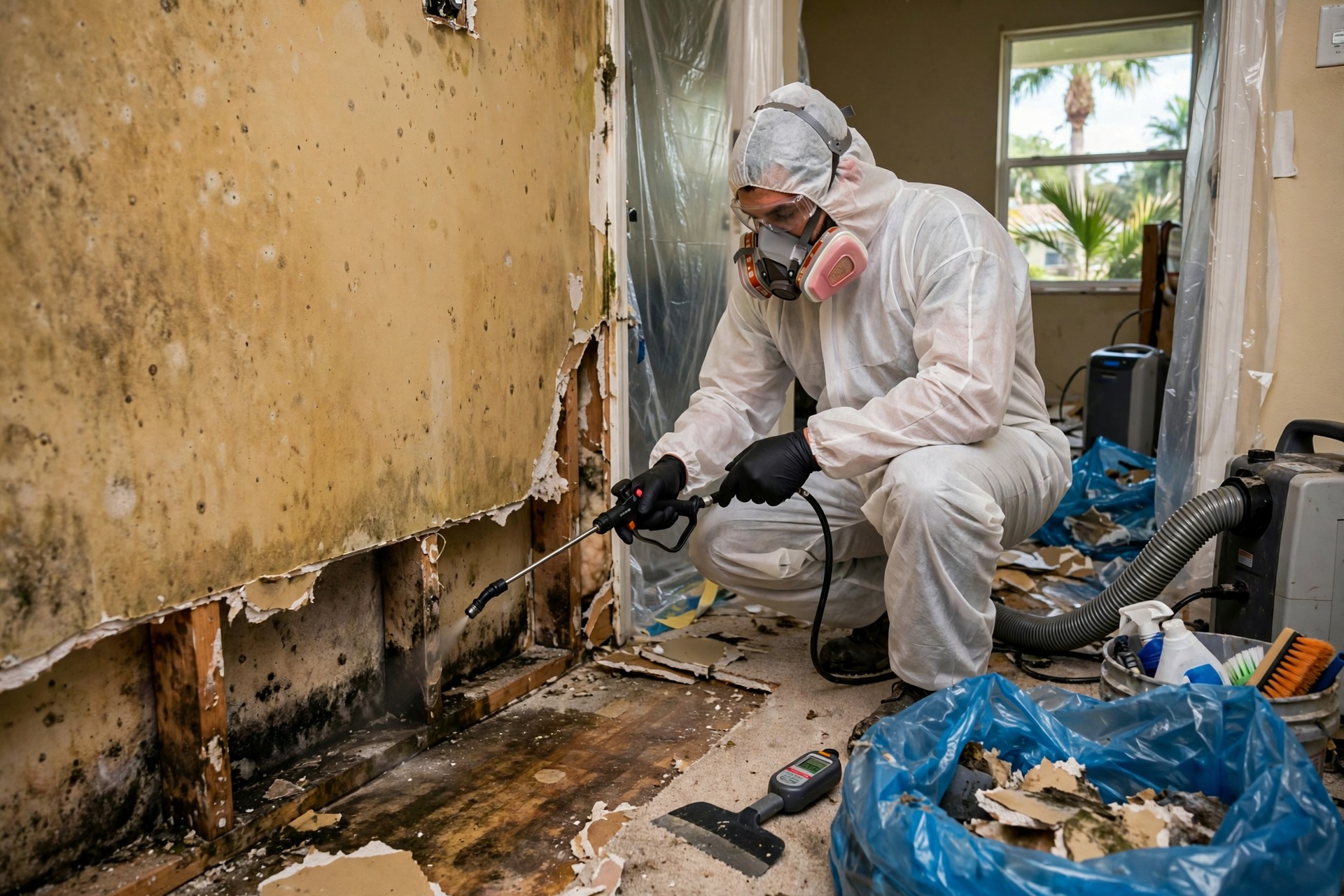
Fort Myers homes built before 1980 in the River District and McGregor often have lath-and-plaster walls and slab-on-grade foundations that trap water after Lee County flooding. Post-flood mold treatment starts with moisture mapping using infrared cameras to locate saturation behind baseboards and under flooring that homeowners miss. Technicians remove affected porous materials like carpet pad and drywall up to 18 inches above the water line, then apply EPA-registered antimicrobials followed by HEPA air scrubbing to capture spores released during demolition.
The tropical savanna climate brings high humidity even in winter, so drying equipment must run longer than in drier regions. After Hurricane Ian many Cape Coral and Downtown Fort Myers properties showed mold returning within ten days because dehumidifiers were removed too soon. Treatment includes installing temporary containment barriers and monitoring moisture levels daily until readings stay below 12 percent on wood and 55 percent relative humidity in the air before any reconstruction begins.
In low-lying McGregor and near Centennial Park, storm surge or canal overflow can push water under cabinets and into HVAC returns. Post-flood mold treatment requires pulling registers, cleaning coils, and replacing insulation in ductwork that has wicked moisture. Technicians also inspect attics where roof leaks from wind-driven rain combine with flood water to create hidden colonies above ceilings that standard visual checks miss.
Technician insight
In Fort Myers the thing that catches most people out with Post-Flood Mold Treatment is how quickly spores take hold again once the sun comes out. Our tropical savanna humidity keeps wood and concrete damp for days after the water recedes, especially in older River District homes with poor slab drainage. Homeowners often pull fans too soon and the growth restarts behind baseboards within a week.
McGregor Home After Canal Overflow
Water entered a 1960s McGregor slab home through the garage and laundry room during heavy rains. Infrared scans showed saturation under the kitchen cabinets and into the HVAC return. Crews removed baseboards and lower drywall, dried the slab for six days, treated framing, and cleared the home before new flooring was installed.
Post-Flood Mold Treatment Services We Offer
✓Hidden Moisture Mapping After Flooding
Infrared scanning and pin-meter readings locate trapped water in walls and subfloors common in older Fort Myers slab homes before visible mold appears.
✓Containment and Negative Air Setup
Sealed barriers and HEPA-filtered negative pressure prevent spore migration into unaffected rooms during removal in multi-story River District properties.
✓Porous Material Removal and Disposal
Safe extraction and bagging of saturated drywall, insulation, and carpet pad from flood-affected areas in Cape Coral and McGregor homes.
✓Antimicrobial Application and Fogging
EPA-registered treatments applied to wood framing and concrete slabs to inhibit regrowth in the high-humidity Lee County environment.
✓Post-Flood HVAC and Duct Cleaning
Coil and ductwork cleaning plus insulation replacement when flood water has entered returns in homes near the Caloosahatchee River.
Post-Flood Mold Treatment Cost in Fort Myers, FL
| Service | Typical Range | What Affects It |
|---|---|---|
| Single-room post-flood treatment | $650–$1,200 | Moves with square footage and material removal volume |
| Whole-home flood remediation | $2,400–$4,800 | Higher when slab moisture or HVAC involvement requires extra drying days |
| Hidden moisture mapping only | $275–$450 | Includes report for insurance or contractor handoff |
| HVAC and duct cleaning add-on | $350–$650 | Required when registers or returns contacted flood water |
Ranges are typical for Fort Myers, FL and confirmed with an exact written quote before any work starts.
How it works
- 1
Initial Assessment
Technician arrives within hours, documents water source, maps moisture with meters, and sets up containment.
- 2
Water Extraction And Drying
Remove standing water, place commercial dehumidifiers and air movers, then monitor daily until dry.
- 3
Affected Material Removal
Cut out and dispose of moldy drywall, insulation, and flooring per IICRC S520 guidelines.
- 4
Treatment And Clearance
Apply antimicrobials, run HEPA filtration, then verify with moisture and air sampling before rebuild.
Pricing
Cost depends on square footage affected, depth of water intrusion, and whether HVAC or multiple rooms require treatment.